Fortaleza de São Miguel
Constructed in 1576 by Paulo Dias de Novais, the Fortaleza de São Miguel stands as the imposing administrative center of early Portuguese colonization and the primary terminus for slave traffic destined for Brazil.
As you walk its fortified perimeters, you will confront the stark historical realities of this maritime outpost. Within the courtyard, imposing statues of Portugal's first king, alongside explorers Diogo Cão and Vasco da Gama, overlook the bay.
Inside the fortress—which today houses the Museum of the Armed Forces—elaborate ceramic tiles chronicle the early decades of the Angolan colony.

Our Lady of Conception Church
Founded between 1583 and 1590, this structure served as Luanda's cathedral until 1818, anchoring the Portuguese religious mission.
Jesus Church
Constructed between 1612 and 1636 the Jesus Church is a Baroque expanse.
Once considered the grandest structure in the southern hemisphere, its walls reveal a turbulent history of European rivalry. During the Dutch occupation of 1641, the church was secularized and repurposed as a Parliament and Government Council. Following the Portuguese reconquest in 1648, it was reconsecrated, eventually being elevated to the Cathedral of the Archdiocese of Luanda in 1978.
.jpg/:/cr=t:0%25,l:0%25,w:100%25,h:100%25/rs=w:600,cg:true)
Our Lady of Nazareth Church
Positioned almost directly on the water, the small Church of Our Lady of Nazareth (1664) was designed as a replica of a picturesque fishermen's sanctuary in Portugal. As you study its interior, you will find intricate narrative tiles illustrating historical miracles alongside a striking black image of Santa Iphigenia of Ethiopia—a profound testament to the cross-cultural religious synthesis and the diverse demographic realities of the era.
.jpg/:/rs=w:600,cg:true,m)
Palacio de Ferro -Iron Palace
Built in 1890 and reputedly designed by Gustave Eiffel, this structure was pre-fabricated in France and destined for Madagascar. However, the ship carrying it was caught in the notorious Benguela currents and wrecked along Angola's Skeleton Coast. Portuguese rulers claimed the salvaged cargo, inadvertently establishing an icon of European industrial engineering in the heart of Luanda.
Palacio D. Ana Joaquina & Museo de Antropologia
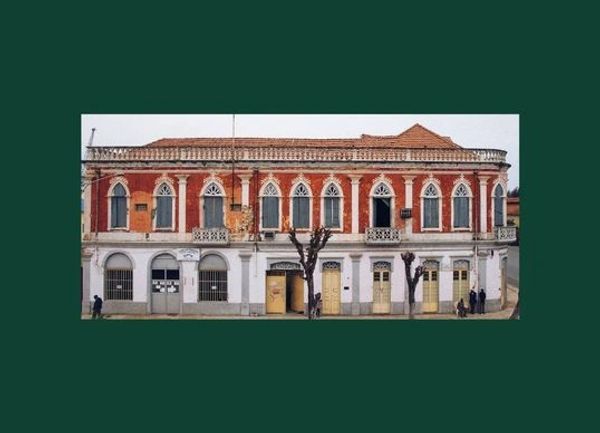
Palacio D. Ana Joaquina, constructed in 1755 as the residence of the notorious slave trader Ana Joaquina dos Santos da Silva. Nearby stands the Museu de Antropologia (18th century), originally the palace of another prominent slave-trading family. Since 1976, this space has been reclaimed to host Angolan ethnographic art, transforming a site of human exploitation into a vital repository of cultural heritage and reflection.
.jpg/:/rs=w:600,cg:true,m)
Banco Nacional (1926)
Grande Hotel
Constructed as the city's first luxury accommodation, its function shifted dramatically during the civil war, when its halls housed dislocated families seeking refuge. Today, operating as a cultural center, it stands as an architectural survivor of national conflict.
Grande Universo Hotel
The Grande Universo Hotel built in 1949 houses original paintings by Neves Sousa.
-7d4b07a.jpg/:/rs=w:600,cg:true,m)
Lubango Cathedral
Situated in the city center, the 1939 Lubango Cathedral represents a distinct geopolitical shift in colonial ambition. You will observe its striking Art Deco lines—an architectural style that signalled a move from tentative, remote missionary outposts to established, confident civic permanence
Church Mission of Huíla
Dating from 1880, this structure stands as one of the oldest in the province. You will walk the grounds of this early settlement, examining it not merely as a religious edifice, but as a strategic outpost. It provides a crucial ethnological lens for understanding the mechanics of colonial missionary action and its profound, lasting impact on the traditional social structures of the local tribal populations.